
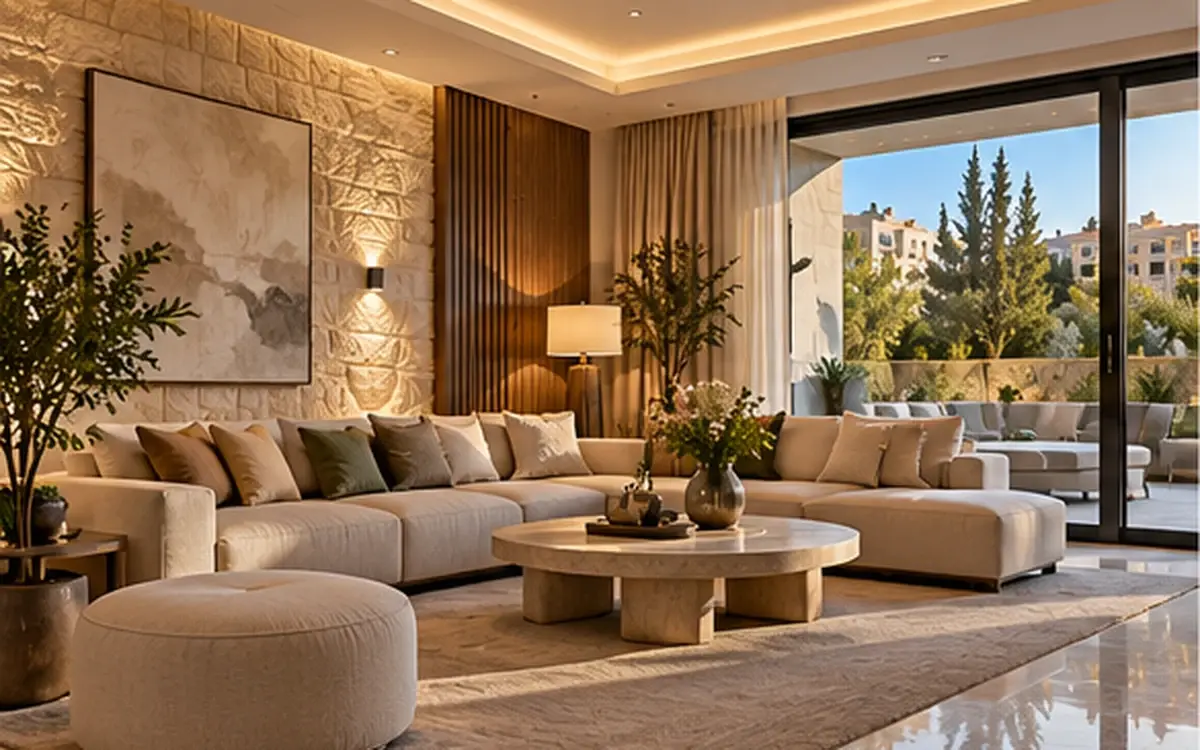
Modern Interior Lighting Design in Amman: Transform Your Home With Smart Lighting Ideas
Modern Interior Lighting Design in Amman: How Lighting Transforms Your Home
Lighting has the power to completely change the appearance and atmosphere of a room.
A carefully designed lighting scheme can highlight architectural features, improve comfort, support everyday activities, and create a welcoming environment.
For homeowners planning interior lighting design in Amman, the goal should be to combine attractive fixtures with practical illumination and energy-conscious planning.
Why Does Interior Lighting Design Matter?
Lighting influences how colors, textures, furniture, and room proportions appear.
A room with beautiful finishes may still feel uncomfortable if its lighting is poorly distributed or excessively bright.
An effective design considers the size and purpose of the room, natural daylight, ceiling height, surface reflectance, and the activities taking place inside it.
Rather than relying on a single central fixture, designers often combine several types of lighting.
The Three Layers of Interior Lighting
Ambient Lighting
Ambient lighting provides the room's general illumination.
It may come from ceiling fixtures, recessed lights, chandeliers, or indirect lighting systems.
The objective is to create a comfortable overall brightness suitable for the space.
Task Lighting
Task lighting provides focused illumination for specific activities.
Examples include lights over kitchen countertops, reading areas, study desks, and bathroom mirrors.
Proper positioning helps reduce uncomfortable shadows and improves visibility.
Accent Lighting
Accent lighting highlights particular design features, including artwork, textured walls, decorative shelving, and architectural details.
Used carefully, it adds depth and visual interest without overwhelming the room.
Hidden LED Lighting in Modern Homes
Concealed LED strips are commonly used in contemporary interiors.
They can be integrated into ceiling recesses, cabinetry, shelves, and architectural features.
When designed correctly, indirect lighting can produce a subtle and refined atmosphere.
However, installation requires attention to electrical safety, heat dissipation, driver accessibility, and the suitability of the selected LED system.
Choosing the Right Lighting Color
Light color affects the atmosphere of a room.
Warm white lighting is often preferred in bedrooms and living areas, where homeowners want a comfortable and relaxing environment.
More neutral lighting can be useful in kitchens, bathrooms, and workspaces when accurate visibility is important.
The best choice depends on the room's function, finishes, and personal preference.
Smart Lighting and Energy Efficiency
Modern lighting controls can make a home more convenient.
Dimmers, occupancy sensors, timers, and compatible smart lighting systems can provide greater control over brightness and usage.
Energy-efficient LED fixtures can also help reduce electricity consumption compared with older, inefficient technologies.
Nevertheless, product compatibility and professional electrical installation remain important.
Planning Lighting During Home Renovation
Lighting should be considered early in the renovation process, particularly when installing suspended ceilings or changing electrical wiring.
A lighting plan should identify fixture locations, switching zones, power requirements, and maintenance access before finishes are completed.
This reduces the risk of unwanted changes later.
Interior Lighting Services by Renovation Spot
Renovation Spot offers lighting solutions and interior design services in Amman and Jordan.
Explore our Lighting Solutions for residential lighting ideas and design support.
Frequently Asked Questions
Is hidden lighting suitable for small rooms?
Yes, when properly designed. Subtle indirect lighting may help create a comfortable atmosphere without visually cluttering the ceiling.
Should every room use the same lighting color?
Not necessarily. Lighting should be selected according to how each room is used and the atmosphere desired.
When should lighting be planned during renovation?
Ideally during the design stage, before ceilings, walls, and electrical installations are finalized.
Illuminate Your Home With Better Design
The most effective lighting plans combine aesthetics, comfort, practicality, and safe installation.
Contact Renovation Spot in Amman to discuss a modern lighting solution for your home.